
Why tackling scalp inflammation is the first step to better hair
Share
If your hair is not growing as well as it used to, looks dull no matter what you try, sheds more than expected, or feels thinner and less vibrant, the issue may not start in the hair at all. Very often, it starts in the scalp.
Hair and scalp are one connected system. Hair does not grow despite the scalp. It grows because of it. And one of the biggest, most frequently overlooked disruptors of healthy hair is scalp inflammation — a condition that affects far more people than realise it, often without any obvious symptoms.
Addressing scalp inflammation is not a trend. It is a foundation. And for those dealing with an itchy scalp, flaky scalp, scalp redness, or unexplained hair changes, it is often the missing piece.
What Is Scalp Inflammation?
Scalp inflammation is the scalp's response to irritation, imbalance, or immune activation. It can present with visible symptoms — redness, flaking, itching, soreness, a tight or burning sensation — but it can also be quiet and ongoing, happening beneath the surface with very few outward signs at all.
This is one of the reasons it is so commonly missed. A scalp does not need to look visibly irritated to be in a state of low-grade chronic inflammation. And it is often this low-grade, persistent form that does the most cumulative damage to hair over time.
Common triggers include disrupted scalp microbiome, excess sebum or impaired sebum quality, product buildup and aggressive cleansing, sensitivity reactions to synthetic fragrance or harsh surfactants, hormonal shifts (particularly during perimenopause and menopause), and environmental stress and pollution.
The Scalp-First Principle
At GF Fabulosity, scalp-first care is built into every formula. The scalp is not a backdrop for the hair. It is the soil in which the hair grows — and the quality of what grows is inseparable from the health of what it grows from.
How Scalp Inflammation Affects Your Hair
The scalp is living skin. It contains blood vessels, immune cells, nerve endings, sebaceous glands, and hair follicles. When inflammation is present, all of these systems are affected simultaneously.
Over time, even low-grade chronic scalp inflammation can disrupt the hair growth cycle, pushing follicles out of the growth phase earlier than they should exit. It contributes to increased shedding, reduced hair thickness and density, compromised scalp barrier function leading to sensitivity and discomfort, altered sebum behaviour affecting shine and volume, and increased oxidative stress around the follicle — one of the recognised drivers of premature hair ageing.
In simple terms: an inflamed scalp cannot create the calm, nourished environment that strong, healthy hair needs to grow at its full potential.
This is why treating hair concerns without addressing scalp inflammation so often leads to short-lived or disappointing results. The visible concern is being addressed. The underlying condition is not.
What Causes an Itchy Scalp, Flaky Scalp, or Scalp Redness?
These three symptoms are the most commonly searched, and they are all expressions of scalp inflammation — though they often have overlapping rather than single causes.
Itchy scalp
An itchy scalp can result from a disrupted skin barrier that leaves nerve endings more exposed and reactive, a microbiome imbalance that allows inflammatory microorganisms to proliferate, product buildup or residue that irritates the scalp surface, or sensitivity to silicones and synthetic ingredients that occlude the scalp and prevent it from breathing. In people navigating perimenopause and menopause, hormonal shifts that affect skin hydration and barrier function are a significant and under-discussed trigger for new or worsening scalp itch.
Flaky scalp
Flaking is not always dandruff. It can equally be the result of a dry, compromised scalp barrier shedding accelerated surface cells in response to irritation, an imbalanced microbiome, or contact dermatitis from harsh cleansing agents. The distinction matters because the interventions are different. Stripping the scalp further with anti-dandruff actives when the cause is actually barrier disruption and dryness will worsen the condition, not resolve it.
Scalp redness
Visible redness indicates active inflammation. Blood vessels near the scalp surface dilate in response to immune activation, heat, chemical irritants, or physical friction. Persistent scalp redness that does not resolve with gentle, rebalancing care warrants attention from a trichologist or dermatologist, as it can be a sign of conditions including seborrhoeic dermatitis, psoriasis, or contact dermatitis requiring more specific clinical support.
When to seek specialist support: If you are experiencing persistent scalp redness, significant hair loss, or scalp discomfort that does not improve with a gentle, scalp-first routine within four to six weeks, it is worth consulting a trichologist. Scalp inflammation can be a symptom of underlying conditions that benefit from clinical diagnosis.
Why Calming the Scalp Comes Before Stimulating Growth
There is a common misconception that hair growth solutions must always be stimulating — that more activity, more actives, more intervention equals more hair. In reality, stimulation applied to an inflamed scalp can worsen irritation and accelerate imbalance.
The sequence matters. The first step is always to calm, rebalance, and protect. When inflammation is reduced, the scalp barrier can begin to repair itself, the microbiome becomes more stable, sebum production normalises, and follicles are better supported in the anagen (growth) phase. Only when these conditions are established can hair truly thrive in response to growth-supporting ingredients.
Applying stimulating or clarifying treatments to a reactive, inflamed scalp is the equivalent of trying to grow a garden in soil that has not yet been prepared. The conditions are not right. Calm the environment first.
The Ingredients That Address Scalp Inflammation Naturally
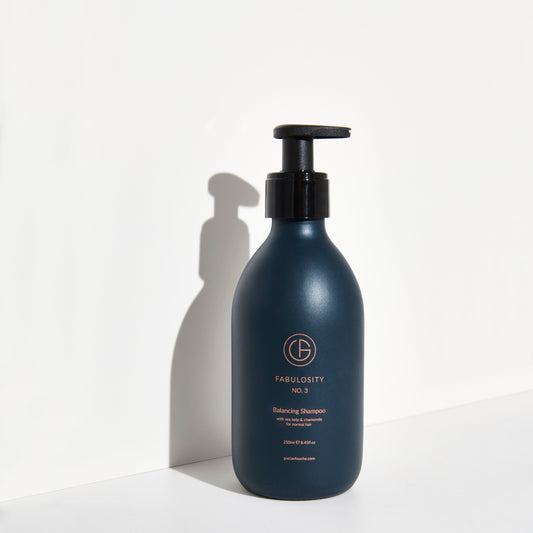
The GF Fabulosity Balancing Shampoo was created specifically for scalps that feel reactive, oily yet uncomfortable, tight, prone to imbalance, or showing early signs of inflammation. Rather than stripping the scalp or masking the symptoms, it works with the scalp's own biology to restore equilibrium. Here is what it contains and why each ingredient earns its place.
Sea Kelp — soothing, mineralising, scalp-resilience support
Sea Kelp is rich in naturally occurring minerals and bioactive compounds that support skin comfort and resilience. In scalp care, it is valued for its soothing properties and its ability to support the scalp during periods of stress and imbalance. By helping to calm irritation and support the scalp's natural repair processes, Sea Kelp reduces inflammatory pressure around the hair follicle and contributes to a healthier environment for hair growth. It is a particularly relevant ingredient for scalps under hormonal or environmental stress.
Chamomile — anti-inflammatory and sensitivity-calming
Chamomile (Chamomilla Recutita, Matricaria) is one of the most well-studied botanical anti-inflammatories in cosmetic dermatology. Its key active compounds, including bisabolol and apigenin, are documented for their ability to calm inflammatory signals in the skin, reduce redness, and quiet reactive skin responses. In scalp care, chamomile is especially relevant for scalps that feel itchy, tight, or uncomfortable even when no obvious flaking is present. A calmer scalp creates a more supportive environment for the hair follicle to complete its full growth cycle undisturbed.
Panthenol (Pro-Vitamin B5) — barrier repair and hydration
Panthenol is a humectant and barrier-supporting active with a strong evidence base in skin and scalp care. It penetrates the skin and converts to pantothenic acid, improving hydration, strengthening the barrier's protective function, and reducing the irritation and reactivity that result from barrier disruption. A well-functioning scalp barrier is essential for keeping inflammation under control. When the barrier is compromised, the scalp becomes more permeable, more reactive, and less able to regulate its own inflammatory response. Panthenol directly addresses this.
Inulin — prebiotic microbiome support
Inulin is a prebiotic derived from plant sources that selectively nourishes beneficial microorganisms on the scalp surface. The scalp microbiome — the community of bacteria, fungi, and other microorganisms that live on the scalp — plays a central role in regulating inflammation, sebum behaviour, and overall scalp comfort. When the microbiome is disrupted, inflammatory species can proliferate and drive the conditions that cause persistent itch, flaking, and sensitivity. By selectively feeding beneficial bacteria, inulin helps restore microbial balance and supports a more stable, resilient scalp environment over time.
What You May Notice When Scalp Inflammation Is Reduced
When the scalp begins to calm and rebalance, the improvements are rarely limited to a single symptom. Because scalp health is systemic, calming inflammation tends to produce a cascade of positive changes across multiple hair concerns simultaneously.
You may notice reduced itching or tightness, less flaking, improved shine and lustre, better volume and bounce, reduced shedding over the weeks and months that follow, and hair that feels stronger and more resilient to breakage. These changes are not superficial. They reflect a scalp that is functioning more optimally — and a hair growth environment that has been genuinely improved rather than just managed.
"Treating hair concerns without addressing scalp inflammation is like treating the symptom while leaving the cause in place. Calm the scalp, and hair often improves in ways that no styling product or topical treatment could achieve on its own."
Frequently Asked Questions
What is the fastest way to calm scalp inflammation?
The most effective immediate steps are switching to a gentle, sulphate-free, silicone-free shampoo that does not further strip or occlude the scalp, removing any products with known irritants (synthetic fragrance, harsh preservatives, silicones), and introducing prebiotic and barrier-supporting ingredients like inulin and panthenol. Consistency matters more than speed — most scalps begin to show noticeable improvement within two to four weeks of a rebalancing routine.
Can an itchy scalp cause hair loss?
Yes, indirectly. Persistent scalp inflammation disrupts the hair growth cycle and increases the proportion of follicles in the shedding phase. Physical scratching also causes mechanical trauma to the follicle and scalp surface. Addressing the inflammation that drives the itch is one of the most important steps in reducing inflammation-related hair shedding.
Is a flaky scalp always dandruff?
No. Flaking can result from a dry, barrier-disrupted scalp shedding cells in response to irritation, a microbiome imbalance, product buildup, or contact sensitivity — none of which are the same condition as dandruff. Treating a dry, irritated scalp with anti-dandruff actives designed for fungal overgrowth can strip the scalp further and worsen the problem. Identifying the cause is important before choosing an intervention.
Why has my scalp become itchy and sensitive during perimenopause or menopause?
Oestrogen plays a key role in maintaining skin hydration, barrier integrity, and the regulation of sebum production. As oestrogen levels decline during perimenopause and menopause, the scalp — like facial skin — can become drier, thinner, more reactive, and more prone to inflammatory responses. Many women find that scalp sensitivity and itch emerge or worsen during this transition even without any change in their hair care routine. Supporting the scalp barrier and microbiome is particularly important during this phase.
Can silicones cause scalp inflammation?
Silicones create an occlusive film on the scalp that can impair its ability to breathe, regulate sebum, and maintain microbiome balance. For many people, particularly those with reactive or sensitive scalps, regular silicone use contributes to buildup, blocked follicles, and conditions that promote inflammation. Switching to silicone-free hair care is often a significant step in resolving persistent scalp sensitivity.
How long does it take to see results from a scalp-calming shampoo?
Most people notice an improvement in scalp comfort — reduced itch, tightness, or irritation — within two to three washes. Visible reductions in flaking and redness typically follow over two to four weeks of consistent use. Improvements in hair quality — shine, volume, reduced shedding — generally become apparent over six to twelve weeks, reflecting the time it takes for the hair growth cycle to respond to an improved scalp environment.
The Short Answer
Scalp inflammation is one of the most common and most overlooked causes of poor hair health. An itchy scalp, flaky scalp, or scalp redness are the visible symptoms — but the underlying disruption to follicle function, barrier integrity, and microbiome balance affects hair quality, density, and growth whether symptoms are visible or not. Addressing inflammation is not a cosmetic step. It is the foundation.
Calm the Scalp. Transform the Hair.
The GF Fabulosity Balancing Shampoo is formulated with Sea Kelp, Chamomile, Panthenol, and Inulin to rebalance, soothe, and support a healthier scalp environment. Silicone-free. Award-winning. Scalp-first.
Shop the Balancing Shampoo