
Why Your Conditioner is Making Your Hair Flat, Dull, or Heavy?
Share
People sit in my chair and tell me their conditioner is ruining their hair. They have gone sulphate-free, they have tried every brand on the shelf, they have stopped conditioning altogether - and still their hair sits flat, heavy, or frizzier than it should be. Here is what I tell them: your conditioner is probably not the problem. The ingredients inside it are. And once you understand what those ingredients are doing, the fix becomes obvious.
Why "Flat Hair" Is Not One Problem
When someone says their conditioner makes their hair flat, they usually mean one of three very different things. The solution to each one is different - and reaching for the wrong fix can make things worse.
Flat at the root, lacking lift. The hair sits close to the scalp, lacks body, and loses volume quickly after washing. This is often less about the conditioner formula itself and more about where and how it is applied - but the right conditioner can actively address the scalp's sebum environment to create more lift.
Heavy and weighed down through the lengths. The hair feels coated, takes longer to dry than it should, looks dull rather than shiny, and builds up a residue over time. This is almost always a silicone problem.
Frizzy, dull, coarse, or straw-like despite using conditioner. The hair feels moisturised immediately after washing but reverts to dryness quickly, the frizz returns within hours, or the hair looks flat and matte rather than shiny. This is typically the result of synthetic emollients creating a surface film rather than genuine moisture absorption - the hair feels conditioned but is not actually nourished.
Each of these needs a different response. Let us go through them one at a time.
Problem One: Flat at the Root
If your hair loses volume at the root, the issue is usually sebum - the scalp's natural oil - building up around the follicle opening and weighing the hair down at its base. Most conditioners make this worse, not because they are badly formulated, but because they are designed to coat and smooth rather than absorb. Applying them anywhere near the root deposits emollients directly onto an area that is already oily.
The conventional advice is simply to apply conditioner from mid-length to ends only, avoiding the roots entirely. That is sensible, but it does not address the underlying issue. A conditioner formulated with an active absorbent can.
The ingredient to look for: Pink Clay
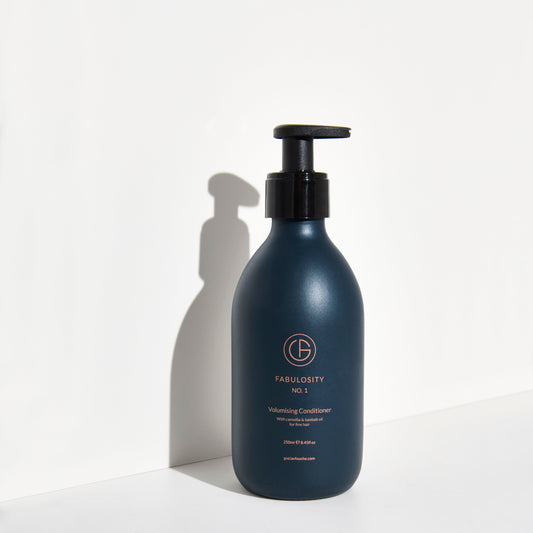
Pink Clay, known as Kaolin, is a naturally occurring clay mineral with a well-established ability to absorb excess sebum and environmental impurities from the hair and scalp surface. Unlike conditioning agents that add to the surface, Kaolin reduces what is already there - lifting away the oiliness that causes the hair to sit flat at the root. In a conditioner, it is a genuinely unusual inclusion, and one of the reasons the GF Fabulosity Volumising Conditioner behaves differently to conventional volumising products, which typically just contain lower concentrations of silicone rather than an active lifting ingredient.
The GF Fabulosity Volumising Conditioner combines Kaolin with Hydrolysed Wheat, Corn, and Soy Proteins and Hydrolysed Silk to build fine-hair structure without weight, alongside lightweight botanical emollients - Baobab Oil, Camellia Oil, and Avocado Oil - that condition without loading the shaft. C15-19 Alkane, a plant-derived lightweight emollient with no silicone equivalent, provides slip and softness without any coating effect. Panthenol and Tocopherol support moisture retention and antioxidant protection throughout.
The result is a conditioner that genuinely addresses the root-volume problem rather than sidestepping it.
Problem Two: Heavy, Weighed-Down Hair
This is the most common conditioner complaint, and the cause is almost always silicones.
Silicones - listed on ingredient labels as dimethicone, cyclopentasiloxane, cyclomethicone, amodimethicone, bis-aminopropyl dimethicone, and a range of similar names ending in "-cone" or "-siloxane" - are synthetic polymers added to conditioners to create immediate slip, shine, and softness. They work by coating the hair shaft in a thin, water-repellent film. That film feels extraordinary for the first wash or two.
The problem is that silicones do not wash out easily. They are hydrophobic (resistant to water) which means they accumulate with every wash. Over time, the coating thickens. Hair becomes progressively heavier, duller, and less responsive. It takes longer to dry. It loses elasticity. And because the coating is water-repellent, it also prevents moisture from actually entering the hair shaft - so while the hair looks shiny, it is often genuinely dehydrated underneath.
The silicone cycle
Silicones require sulphate-based shampoos to remove them effectively. Many people switch to sulphate-free shampoos for scalp health reasons - but if they continue using silicone conditioners, the silicone builds up faster because the gentler shampoo cannot cut through it. The hair gets progressively heavier. They blame the sulphate-free shampoo. The real culprit is the conditioner they kept using.
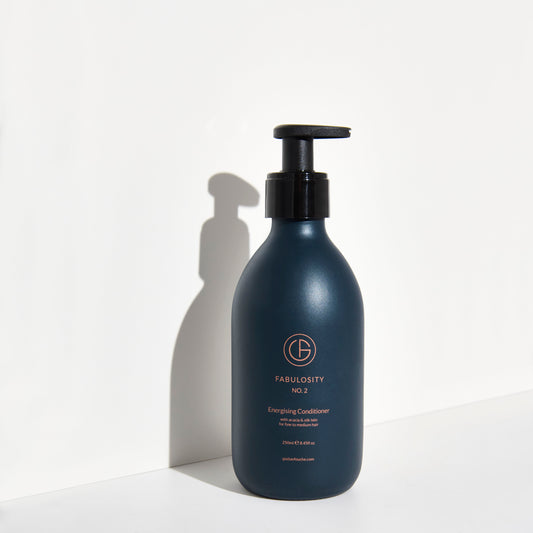
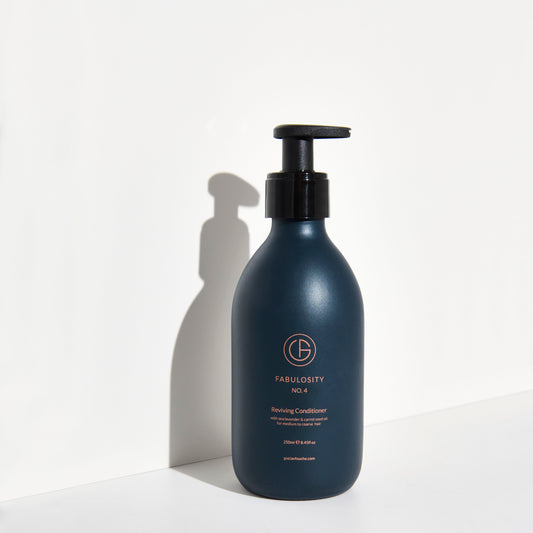
The solution is not to stop conditioning. It is to use a conditioner that does not rely on silicones to deliver its benefits. The GF Fabulosity Reviving Conditioner is entirely silicone-free. It delivers moisture and protein through ingredients that work with the hair structure rather than coating over it: Amaranth Protein and Natural Wheat Protein for structural repair, Vitamin B5 (Panthenol) for genuine moisture retention, Jojoba Oil as a lightweight botanical emollient, and Sea Lavender and Carrot Seed Oil for nourishment. No synthetic film. No accumulation. No progressive heaviness.
Problem Three: Frizz, Dullness, and Coarseness That Conditioner Is Not Fixing
If your hair is frizzy, dull, coarse, or persistently dry despite using conditioner - these are not three different problems. They are the same problem in different weather. Frizz is a lifted, dehydrated cuticle reacting to humidity. Dullness is a lifted, dehydrated cuticle in dry conditions - rough surface texture scatters light rather than reflecting it, which is why truly moisturised hair looks glossy and under-nourished hair looks flat and matte. Coarseness is the tactile version of both. The conditioner is not delivering genuine hydration, and the hair is telling you so in whichever way the environment allows.
The cause is typically synthetic emollients masquerading as moisture. Many conditioners use mineral oil derivatives, petroleum-based emollients, and synthetic waxes alongside silicones to create a surface feel of softness. These create an immediate impression of conditioning but do not penetrate the hair shaft or deliver lasting hydration. They sit on the surface - and a rough, coated surface reflects light poorly, feels coarse to the touch, and cannot hold moisture against humidity.
True moisture absorption requires emollients with a molecular profile compatible with the hair's own lipid structure - botanical oils and butters that can be taken up by the cuticle rather than simply deposited on it. This is the difference between a conditioner that genuinely nourishes and one that creates a temporary illusion of it.
The GF Fabulosity Moisturising Conditioner was formulated specifically for hair that needs deep, lasting nourishment: Babassu Oil for lightweight moisture that absorbs readily into the cortex, Shea Butter for emollient richness and anti-frizz protection, Manketti Oil and Capuaçu Butter for deep conditioning and elasticity, Avocado Oil and Baobab Oil for penetrating hydration, and Amaranth Protein to rebuild structural integrity. All plant-derived. None of it sitting on the surface.
Synthetic Ingredients vs Natural GF Fabulosity
This table maps the most common synthetic conditioner ingredients against the natural ingredients found in GF Fabulosity - your solution to heavy hair.
| What it does | Synthetic / silicone ingredient | GF Fabulosity equivalent | The difference |
|---|---|---|---|
| Slip and detangling | Dimethicone, Cyclopentasiloxane, Amodimethicone | Sugarcane derived Oils, Guar Gum | Silicones coat the shaft and accumulate. Natural oils provides slip without film-forming or buildup. |
| Shine | Dimethicone, Cyclomethicone | Camellia Oil, Jojoba Oil, Baobab Oil | Silicone shine is a surface reflection from a synthetic coating - it fades as the coating wears and looks increasingly flat as buildup accumulates. Botanical oil shine comes from a genuinely smoothed, moisturised cuticle. It deepens with consistent use and does not dull over time. |
| Moisture retention | Mineral oil, Petrolatum | Panthenol (Vitamin B5), Shea Butter, Capuaçu Butter | Mineral oil and petrolatum sit on the surface and prevent moisture loss by occlusion. Panthenol and plant butters actively attract and retain moisture within the hair shaft. |
| Protein and structure | Polyquaternium-11, synthetic film-formers | Hydrolysed Silk and Wheat Proteins, Amaranth Protein | Synthetic film-formers coat rather than penetrate. Hydrolysed proteins have a molecular size that allows partial penetration of the cuticle, delivering structural repair rather than surface coverage. |
| Root volume / sebum control | Lower silicone concentration - no active absorbent | Pink Clay (Kaolin) | Conventional volumising products simply use less of what weighs hair down. Kaolin actively absorbs excess sebum at the root to create genuine lift. |
| Anti-frizz | Bis-aminopropyl dimethicone, heavy silicone blends | Manketti Oil, Shea Butter, Babassu Oil | Heavy silicones suppress frizz by sealing the cuticle shut with a synthetic coating. Plant butters and oils smooth the cuticle by nourishing it - addressing the dryness that causes frizz rather than masking it. |
| Antioxidant protection | Synthetic stabilisers (BHT, BHA) | Amla, Vitamin E, Avocado Oil | Synthetic antioxidants protect the formula. Tocopherol and Avocado Oil protect the hair fibre itself from oxidative damage and environmental stress. |
Which GF Fabulosity Conditioner Is Right for You?
The answer comes down to what your hair is actually telling you.
For flat, fine hair lacking root volume
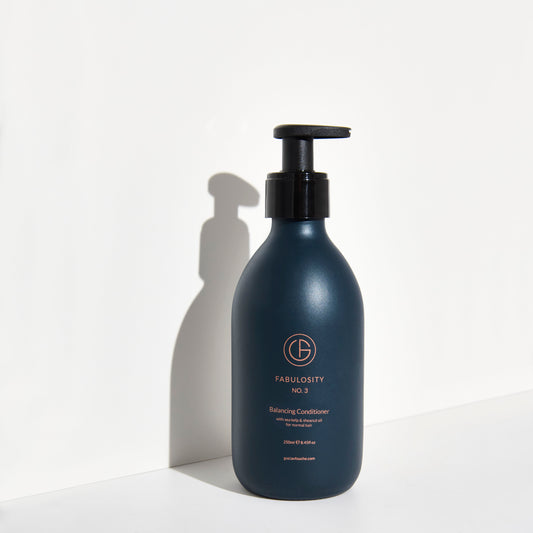
Volumising Conditioner
Kaolin absorbs excess sebum at the root to create genuine lift. Lightweight proteins build fine-hair structure without weight. Plant-derived oils deliver slip without silicone coating. For hair that needs body and bounce from the root.
For hair weighed down by product buildup
Reviving Conditioner
Like all GF Fabulosity haircare, this is completely silicone-free. Protein and moisture delivered through ingredients that work with the hair structure rather than coating it. For hair that feels heavy, takes too long to dry, or has lost its natural movement.
For dry, frizzy, dull, or coarse hair
Moisturising Conditioner
Deep nourishment from botanical oils and butters that absorb into the hair shaft rather than sitting on its surface. Babassu Oil, Shea Butter, Manketti Oil, Capuaçu Butter, and Amaranth Protein for lasting moisture, anti-frizz, and structural repair. A genuinely nourished cuticle lies flat, reflects light evenly, and holds that smoothness through the day.
Not sure which problem you have? Ask yourself: does my hair feel heavy and coated (silicone buildup? go Reviving), flat and oily at the root with no lift (sebum at the follicle? go Volumising), or dry, dull, and frizzy despite conditioning (surface-only emollients? go Moisturising)? All GF Fabulosity conditioners are silicone-free, so whichever you choose, you are not adding to the problem.
Frequently Asked Questions
Is my conditioner making my hair flat?
It might be, but the more precise answer is that certain ingredients in your conditioner are likely making your hair flat. Silicones, heavy synthetic waxes, and mineral oil derivatives all create a coating on the hair shaft that accumulates over time, progressively weighing the hair down and reducing its natural movement. If your hair has become flatter and heavier over months of use, product buildup from silicone-based conditioners is the most common cause. Switching to a silicone-free formula and allowing a few weeks for the buildup to clear typically resolves it.
Why does conditioner weigh my hair down?
Conditioner weighs hair down when its key ingredients are film-forming rather than absorbing. Silicones deposit a layer on the hair shaft with every use and do not wash out easily, so the film thickens over time. The hair becomes heavier, less elastic, and duller. The fix is a conditioner formulated with lightweight botanical emollients and hydrolysed proteins that work with the hair structure rather than coating over it, and crucially, one that does not require a sulphate-heavy shampoo to remove it.
Can conditioner cause flat roots?
Yes, if applied too close to the root. Most conditioners contain emollients designed to coat and smooth -- depositing these at the root adds to the sebum that is already present, which weighs the hair down at its base and kills volume. Applying conditioner from mid-length to ends only is the standard advice, but a conditioner containing Kaolin (a clay mineral that actively absorbs sebum) can address the root-volume problem more directly, even when used closer to the scalp.
How do I add volume without losing moisture?
The common assumption is that you have to choose between volume and moisture. You do not... but you do need the right formulation. A volumising conditioner built around lightweight proteins, a sebum-absorbing clay like Kaolin, and plant-derived lightweight emollients can provide genuine moisture to the lengths while creating lift at the root. The key is avoiding the heavy silicones and synthetic waxes that create moisture in the short term at the cost of weight and buildup in the long term.
Is conditioner bad for fine hair?
Silicone-based conditioners are bad for fine hair. Fine hair has a smaller shaft diameter, which means silicone coating has a proportionally larger impact on weight and volume. But fine hair still needs moisture and protein -- skipping conditioner entirely often leads to breakage and further thinning over time. A lightweight, silicone-free conditioner formulated specifically for fine hair with proteins that build structure and emollients that do not coat is not just safe for fine hair, it is essential for its long-term health.
Why is my hair still frizzy after using conditioner?
Frizz is caused by the hair cuticle lifting in response to dryness or humidity. A conditioner that addresses frizz only by coating the cuticle shut with silicone or synthetic wax provides temporary smoothness but does not resolve the underlying moisture deficit so the frizz returns as soon as the coating wears off or the hair is exposed to humidity. A conditioner that delivers genuine moisture absorption through botanical oils and butters that penetrate the cuticle addresses the cause rather than the symptom, producing anti-frizz results that last.
Why does my hair look dull even after conditioning?
Dullness is almost always a cuticle problem. When the hair cuticle is lifted, whether from dryness, silicone buildup weighing individual scales down unevenly, or synthetic emollients sitting on the surface rather than smoothing it. Light scatters off the rough surface instead of reflecting from it. The result is flat, matte hair regardless of how much conditioner you use. A silicone-free conditioner with botanical oils that genuinely penetrate and smooth the cuticle (rather than coating over it) will produce a noticeably different kind of shine: deeper, more even, and longer-lasting than the surface gloss silicones create.
How long does it take to see results after switching to silicone-free conditioner?
Most people notice a difference in weight and movement within two to four weeks: the time it takes for silicone buildup to clear as you wash with a silicone-free routine. During this transition period, hair may temporarily feel different as the coating dissolves, which some people mistake for the new conditioner not working. Stick with it. The structural and moisture benefits of a genuinely nourishing silicone-free formula build over consistent use and continue to improve over several weeks.
What ingredients should I avoid in conditioner if I want more volume?
The main ones to look for on the label: Dimethicone, Cyclopentasiloxane, Cyclomethicone, Amodimethicone, Bis-aminopropyl Dimethicone (any INCI name ending in "-cone" or "-siloxane"), Mineral Oil, Petrolatum, and heavy synthetic waxes such as synthetic beeswax or Polyethylene. These are the ingredients most commonly responsible for weight and buildup. A conditioner that contains none of them and replaces them with lightweight botanical alternatives will not compromise your volume.
The short answer
Your conditioner is making your hair flat because of what is in it, not because conditioner itself is the problem. Silicones, synthetic waxes, and mineral oil derivatives coat the hair shaft and build up over time. The solution is a silicone-free conditioner formulated with ingredients that nourish the hair from within rather than sitting on its surface and the right one depends on whether your hair is flat at the root, heavy through the lengths, or dry, dull, and frizzy despite conditioning.
Find Your Conditioner
Three silicone-free conditioners, each formulated for a specific hair need. No coating, no buildup, no compromise between volume and moisture.
Shop Conditioners