
The Ultimate Guide to Amaranth's Hair Benefits
Share
Amaranth is good for hair in two ways, depending on which part of the plant you use. Amaranth seed oil is one of the richest plant sources of squalene, a lipid your own scalp makes, so it softens and adds shine. Amaranth protein is unusually rich in the amino acid lysine, and in a shampoo it helps cleanse gently while leaving hair feeling soft rather than stripped.
You have probably seen amaranth on an ingredient list and wondered what an ancient grain is doing in your shampoo. It is a fair question. Amaranth has been grown as food in Central and South America for thousands of years, and it is only recently that haircare has caught up with what makes it special. This guide explains what amaranth actually contains, what each form does for your hair, and where you will find it in the GF Fabulosity haircare range.
What Is Amaranth?
Amaranth is a pseudocereal: a seed eaten like a grain, in the same family of foods as quinoa and buckwheat. The seeds are tiny, but they are dense with protein and oil. Those two parts are what haircare uses.
That distinction matters, because amaranth oil and amaranth protein do different jobs. Most articles blur them together. We will keep them apart.
Is Amaranth Oil Good for Hair?
Yes, and the reason is squalene. Squalene is a natural lipid. Your skin and scalp produce it as part of sebum, the oil that keeps hair and scalp soft and protected. When you over-wash, use harsh products or simply get older, that natural layer thins out, and hair can feel dry and look dull.
Amaranth seed oil is one of the most concentrated plant sources of squalene there is. It is also rich in linoleic and oleic acids, two fatty acids that soften and smooth. Put simply, amaranth oil gives hair back the kind of lipids it is used to having.
PubMed Research: Squalene in Amaranth Oil
Researchers compared oils from amaranth, buckwheat and three varieties of quinoa. All of them contained squalene, but amaranth oil had the most, at 7.6g per 100g, more than three times the level in buckwheat oil. Linoleic and oleic acids were the main fatty acids across all the oils tested. This was a food chemistry study of the oils themselves, not a test on hair.
Source: Paśko et al., Plant Foods for Human Nutrition, 2024, doi.org/10.1007/s11130-024-01139-0
Amaranth oil and antioxidants
Amaranth's oil-rich fraction also carries antioxidants. Interestingly, squalene on its own is only a weak antioxidant. The whole amaranth extract performs better, because it brings along vitamin E compounds called tocotrienols. It is a good example of why the whole ingredient can be more useful than its headline component.
Published Research: Amaranth's Antioxidant Activity
Food scientists measured the antioxidant capacity of pure squalene against a fat-soluble amaranth extract containing the same amount of squalene. The amaranth extract showed higher antioxidant activity, which the researchers linked to tocotrienols and other minor compounds in the oil. The study tested the extract in the lab, not on hair or skin.
Source: Tikekar et al., Journal of Agricultural and Food Chemistry, 2008, doi.org/10.1021/jf801729m
What Does Amaranth Protein Do for Hair?
Hair is almost entirely protein, mostly keratin. Over time, colouring, heat and everyday brushing wear away at the cuticle, the overlapping outer layer that keeps each strand smooth. That is when hair starts to feel rough, tangle easily and lose its shine.
Amaranth protein is notable for being rich in lysine, an amino acid that many plant proteins are short of. In haircare, plant proteins are broken down into smaller pieces (hydrolysed) so they can settle onto the hair's surface, where they help it feel smoother and softer.
PubMed Research: Lysine in Amaranth Protein
A study of amaranth and quinoa seed proteins found both were high in lysine, at 6.3 to 8.2g per 100g of protein. Lysine is the amino acid most cereal grains lack, which is why amaranth is valued as a high-quality plant protein. This study looked at nutritional quality, not hair.
Source: Thanapornpoonpong et al., Journal of Agricultural and Food Chemistry, 2008, doi.org/10.1021/jf802673x
There is good evidence for how hydrolysed proteins behave on hair in general. The study below used a keratin protein rather than amaranth, so it shows the broader mechanism, not amaranth specifically.
PubMed Research: How Hydrolysed Proteins Work on Hair
Researchers added a hydrolysed keratin protein to a mild shampoo and conditioner and tested them on hair fibres. Hair hydration improved, especially with heat, and electron microscope images showed protein deposits where the cuticle scales meet. The researchers suggest this helps seal the cuticle, adding brightness and softness.
Source: Villa et al., BMC Biotechnology, 2013, doi.org/10.1186/1472-6750-13-15
Where Is Amaranth in GF Fabulosity?
You will find amaranth in two forms across the GF Fabulosity haircare range, each placed where it does the most good.
Where You Will Find It
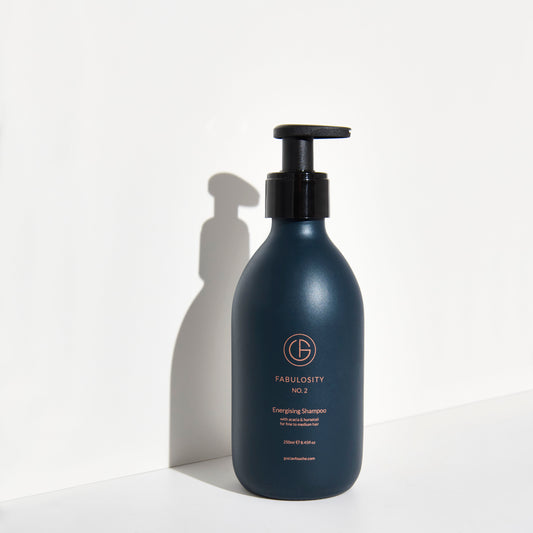
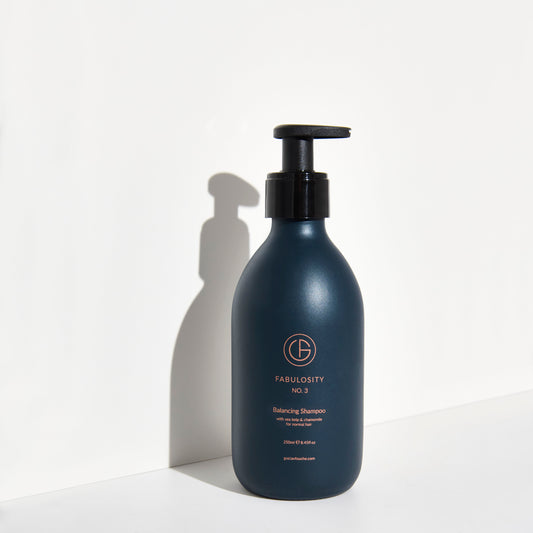
Amaranth protein is in all five shampoos: Volumising No. 1, Energising No. 2, Balancing No. 3, Reviving No. 4 and Moisturising No. 5. Amaranth seed oil is in the Energising Conditioner.
In the shampoos, amaranth appears as sodium cocoyl hydrolysed amaranth protein: amaranth protein joined with coconut-derived fatty acids to make a gentle cleansing ingredient. It lifts away build-up while the protein part leaves hair feeling soft, so your hair is cleansed without that squeaky, stripped feeling. Every formula is silicone-free, so nothing coats the hair to fake the result.
In the Energising Conditioner, amaranth seed oil works alongside argan oil to soften and smooth from mid-lengths to ends. The oil comes from spiny amaranth (Amaranthus spinosus), a close relative of the grain amaranth measured in the studies above.
Which amaranth shampoo is for you?
Each shampoo is numbered by its balance of protein to moisture. Lower numbers give more lift and strength. Higher numbers give more softness and hydration.
Best for
Fine, Flat or Oily Hair
Volumising No. 1 (100% protein) or Energising No. 2 (75% protein). Lift and strength without weight.
Best for
Dry, Coloured or Damaged Hair
Reviving No. 4 (75% moisture) or Moisturising No. 5 (100% moisture). Softness for hair that has been through a lot.
Not sure which number you are? Balancing No. 3 is an equal mix of protein and moisture and suits most fine to medium hair. Or read how the GF Fabulosity System works, and mix your shampoo and conditioner numbers to suit your hair.
How to Get the Most from Amaranth in Your Routine
This is the salon routine, step by step. The order matters as much as the products.
Brush before you wash
Start with dry hair and brush it through with The Fab Brush. Loosening knots before the water goes on means less tangling in the shower and less pulling afterwards.
Cleanse the scalp
Use around six pumps of shampoo, a little more or less depending on how long your hair is. Emulsify it between your hands, then spread it evenly over the scalp and massage it in. Cover all of it, including behind the ears and the nape of the neck. You are cleaning the scalp and working away the impurities of the day.
Rinse thoroughly
This will take more than one dip under the shower. Work the shampoo out of the scalp and let the foam running off cleanse the rest of your hair. There is no need to rub the lengths. If your hair needs it, shampoo a second time and rinse thoroughly again.
Condition mid-lengths to ends
Only once the shampoo is fully rinsed out, apply your matching conditioner through the mid-lengths to the ends. For amaranth seed oil, choose the Energising Conditioner. If your scalp is not prone to greasiness, you can condition all the way to the scalp. Because the formulas are silicone-free, that is one of the defining differences of GF Fabulosity.
Milk the conditioner through
Take a section of hair and run it through your hand along its full length, pressing the conditioner into the hair as you go. Work through every section. This helps close the cuticle layer, so your hair keeps its condition for longer.
Rinse, then detangle gently
Rinse the conditioner out, then detangle with The Fab Brush. Its super-soft nylon bristles ease the knots out of wet hair without tugging, which means less breakage.
Dab dry
Dab your hair dry with a towel rather than rubbing it.
Protect before heat
If you are heat styling, spray Hottie Heat Protector all over the hair, anywhere the heat will touch. It protects hair from heat styling up to 230°C.
"Healthy hair is not about adding something new. It is about giving hair back what it is made of: protein for strength, lipids for softness."
Amaranth for Hair: Your Questions Answered
Is amaranth good for your hair?
Yes. Amaranth oil is rich in squalene and softening fatty acids, which help hair feel smooth and look glossy. Amaranth protein is high in lysine, and in a shampoo it helps cleanse gently while leaving hair soft. Both work on the surface of the hair, improving how it looks and feels.
What does amaranth oil do for hair?
Amaranth oil softens, smooths and adds shine. It is one of the richest plant sources of squalene, a lipid your scalp naturally produces, along with linoleic and oleic acids. It works best in a conditioner applied to mid-lengths and ends.
Does amaranth help hair grow?
There is no published research showing amaranth makes hair grow. What it does well is condition: stronger-feeling, softer, shinier lengths that are less likely to snap when you brush them. Healthy growth starts with the scalp, so pair it with a scalp-first routine.
Which GF Fabulosity products contain amaranth?
All five shampoos contain amaranth protein: Volumising No. 1, Energising No. 2, Balancing No. 3, Reviving No. 4 and Moisturising No. 5. The Energising Conditioner contains amaranth seed oil. Every one is silicone-free.
Is hydrolysed amaranth protein the same as amaranth oil?
No. Hydrolysed amaranth protein comes from the protein in the seed, broken into small pieces so it can settle on hair. Amaranth oil is pressed from the seed's fats. Protein helps hair feel stronger and smoother, oil helps it feel soft and look glossy.
The Short Answer
Amaranth is a genuinely useful haircare ingredient, as long as you know which part you are getting. Its oil brings squalene and softening fatty acids for shine. Its protein brings lysine and gentle cleansing for softness. You will find the protein in all five GF Fabulosity shampoos and the oil in the Energising Conditioner.
Find Your Amaranth Shampoo
Five silicone-free shampoos, each numbered for your hair, each with amaranth protein. Try any of them in a 50ml size from £7.50.
Shop the Shampoos